Loading...
← Back to Indicators
QC GapShift
Advanced Fair Value Gap detection with inversion tracking and adaptive volatility sensitivity
See It In Action
Overview
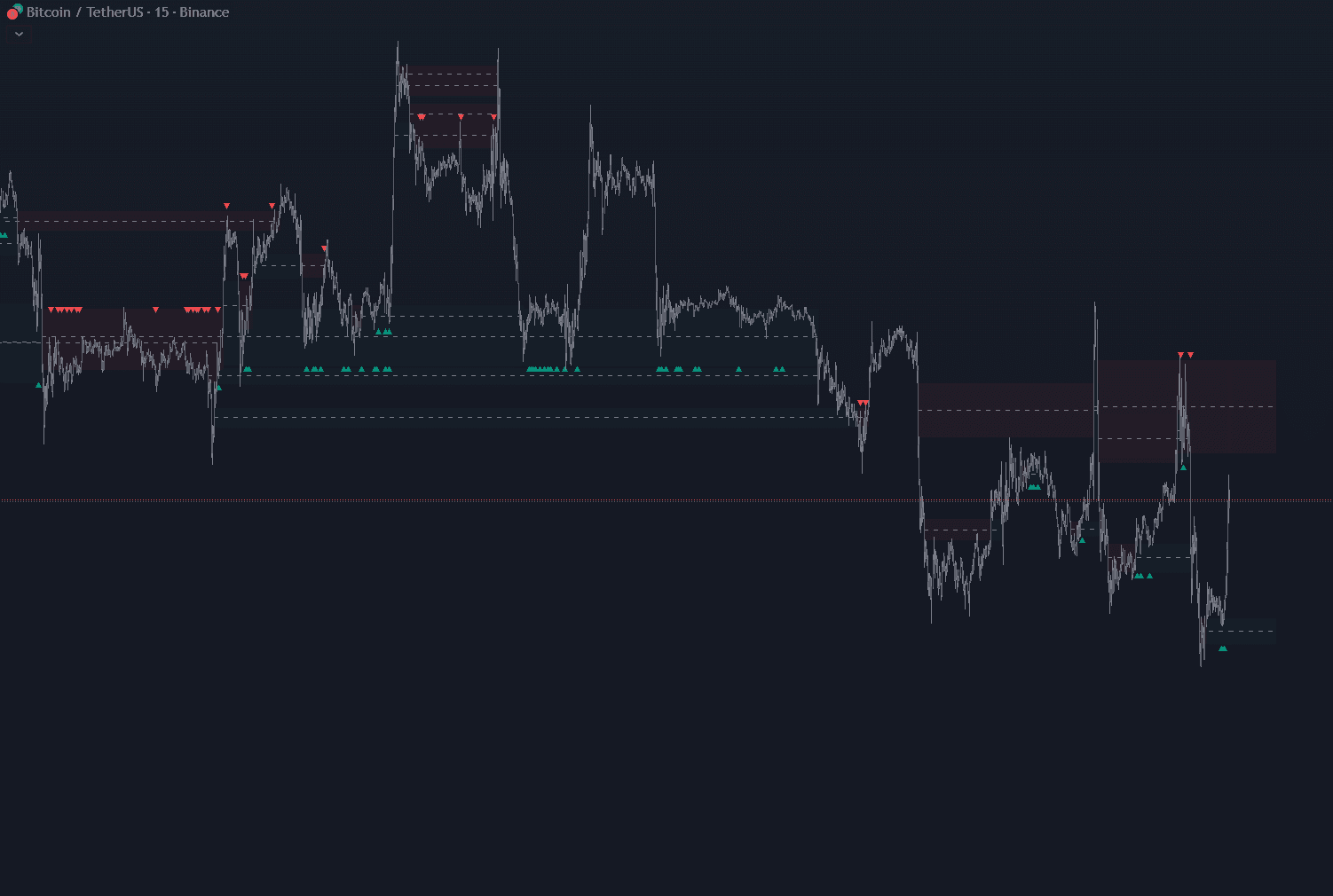
QC GapShift is an advanced Fair Value Gap (FVG) detection system that identifies price inefficiencies and tracks their "inversion" - the moment when price returns to fill the gap, often marking significant reversal or continuation points. Unlike basic FVG indicators that only mark gaps, GapShift uses a sophisticated two-phase system (FVG → Inversion) with adaptive volatility sensitivity to filter out noise and identify only high-probability setups.
The inversion tracking system adds a crucial second phase - monitoring how price interacts with gaps when it returns, often marking significant reversal or continuation points as price fills the inefficiency.
How It Works
QC GapShift detects Fair Value Gaps (price inefficiencies) with a minimum size threshold based on volatility analysis. FVGs enter an "inversion" phase when price returns to test the gap, during which the indicator tracks price interactions and marks significant touch points. The gap is considered "completed" when price fully breaks through, at which point it moves to historical display.
The adaptive volatility sensitivity uses advanced algorithms that automatically adjust sensitivity based on recent price volatility, ensuring the indicator adapts to changing market conditions rather than using fixed thresholds.
Key Features
- Two-Phase System
Phase 1: FVG Detection - Identifies price gaps. Phase 2: Inversion Tracking - Monitors price return to gap, marking interaction points. This two-phase approach captures both gap creation and gap filling, providing complete context for trading decisions.
- Adaptive Volatility Sensitivity
Uses AI-driven volatility multiplier that adjusts sensitivity based on recent price volatility, ensuring the indicator adapts to changing market conditions rather than using fixed thresholds, maintaining effectiveness across different volatility regimes.
- Signal Preference
Choose between Close-based or Wick-based signals - Close uses closing price, Wick uses candle wicks for more sensitive detection, allowing traders to customize sensitivity based on their trading style.
- Historical Zone Display
Completed gaps can be displayed as historical zones, providing context for current price action and showing where previous gaps were filled, helping traders understand price behavior patterns.
- Visual Zone Marking
Active inversion zones are displayed with color-coded boxes (green for bullish, red for bearish) and midline references, with labels marking significant touch points, making gap interactions immediately visible.
- Flux Sensitivity Factor
Configurable multiplier that determines minimum gap size, with adaptive mode automatically adjusting based on volatility, ensuring only significant gaps are identified.
Usage Guide
- Configure signal preference (Close or Wick) based on your trading style - Wick provides more sensitive detection
- Configure Flux Sensitivity Factor to match your trading style - higher values create fewer but stronger gaps
- Enable adaptive sensitivity for automatic volatility adjustment across different market conditions
- Choose whether to display historical zones for context on previous gap fills
- Monitor for inversion zones - these represent high-probability reversal/continuation areas
- Watch for completion signals when price breaks through gaps
- Use touch point labels as entry/exit references within inversion zones
- Focus on zones with multiple touch points as stronger support/resistance areas
Why This Approach
Basic FVG indicators simply mark every gap, creating dozens of zones with no quality differentiation. GapShift's inversion tracking system adds a crucial second phase - monitoring how price interacts with gaps when it returns. This "inversion" phase often marks significant reversal or continuation points as price fills the inefficiency.
The adaptive volatility sensitivity ensures the indicator remains effective across different market conditions, while the historical zone display provides valuable context for understanding current price action in relation to previous gap fills. The two-phase system (FVG → Inversion) provides complete context for trading decisions, making it more valuable than gap-only indicators.
Ready to Get Started?
Subscribe to QC GapShift and identify price inefficiencies with inversion tracking and adaptive sensitivity.
$29/month
Subscribe to QC GapShift on WHOP
Powered by WHOP. Billed monthly. Cancel anytime.